
As a full-time housewife, I have supported my husband for many years. While he isn’t a high earner, having a stable income in this day and age provides an irreplaceable sense of security. However, that stability has come at a high cost to his mental and physical health. Recently, he has begun hinting at a career change, expressing a desire to “reclaim his work-life balance,” even if it means letting go of that steady paycheck.
I understand his pain after 25 years of facing rigid corporate traditions with almost too much sincerity. Yet, I can’t help but wonder: “Why did you suppress your own will for so long?” After three years of debating whether to share this, I’ve decided to write about his 25-year journey and the crossroads he stands at today.
- 1. The “Senior-First” Decade: Starting in the “Employment Ice Age”
- 2. Head Office Grind and “Newbie Chores”
- 3. Paternity Leave in Name Only
- 4. Middle Management Conflict: Rights vs. Responsibility
- 5. Crossroads I: The “Domino” Promotion
- 6. Crossroads II: The Pain of Management (Present Day)
- Finding What Lies Beyond “Stability”
1. The “Senior-First” Decade: Starting in the “Employment Ice Age”
My husband entered the workforce during Japan’s “Employment Ice Age”—a period of extreme job scarcity. Being from the same generation, I know all too well the pressure of that time. You couldn’t complain about the job you were lucky enough to get; everyone just grit their teeth and devoted themselves to the organization.
- A Harsh Initiation: Long holidays like New Year’s or Golden Week were reserved for seniors with families. If a newcomer asked a question, they were told: “Research and think for yourself before you dare ask me!”
- The Hierarchy: You weren’t even allowed to speak to management without going through mid-level staff first.
- Organization Over Family: Back then, prioritizing senior colleagues was the norm. My husband sacrificed his own time and our family time to follow the logic of the organization.
2. Head Office Grind and “Newbie Chores”
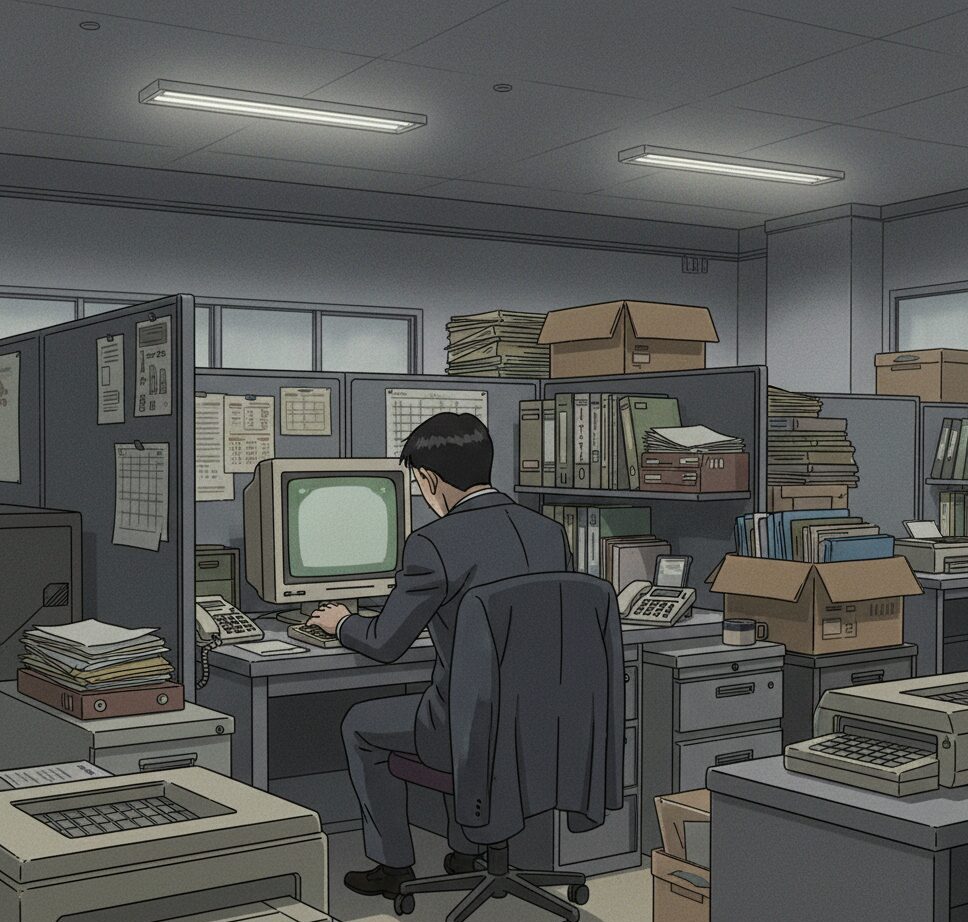
After ten years, he was transferred to the Head Office. His responsibilities grew to include managing branch reports and issuing directives. However, the “chores” typical of the Head Office were exhausting.
- Inefficient Pre-Work Tasks: He had to arrive by 7:30 AM every morning to wipe down the desks of executives and seniors. He also had to scan five major newspapers, clip relevant articles, and have copies ready for circulation by 8:30 AM.
- Chronic Unpaid Overtime: He worked until 10:00 PM daily, reaching 140 hours of overtime a month. Yet, only about 28 hours (approx. $350–$400) were actually paid.
Side note: When I heard he used to go to the library on his days off just to research which articles to clip for the coming week, I thought, “Isn’t that too much?” But he did it just to meet that 8:30 AM deadline.
Even when we got married, our honeymoon was limited to 5 days, including the weekend. While branches allowed 9 days, he followed the Head Office “rule” that they couldn’t take that long. He felt a heavy responsibility to “work harder for the sake of the branches.”

3. Paternity Leave in Name Only
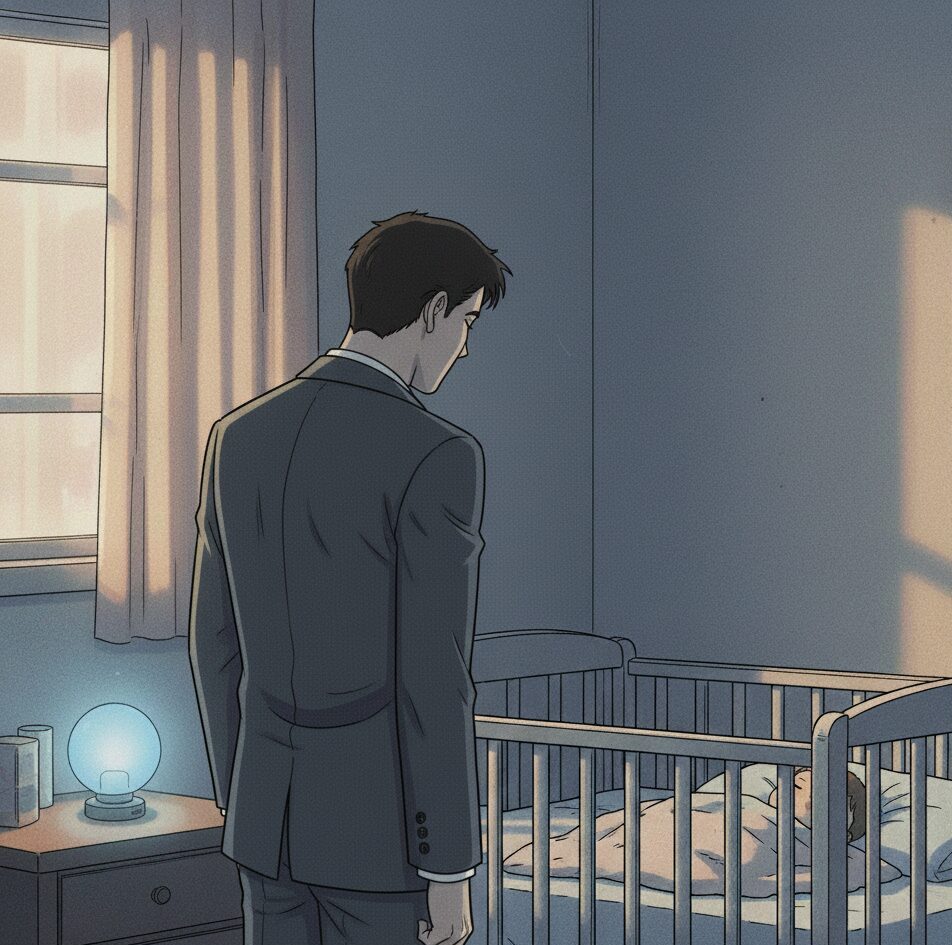
After 15 years, he became a “Unit Head” (Kakarichou) at a branch. Around that time, our first child was born.
- The Paternity Leave Dilemma: To improve “stats,” the branch manager asked him to take “just one week” of leave. However, he was a one-man unit with no subordinates. If he left, work stopped. So, he took a “paper-only” week of leave.
To be honest, as a new mother, him being home for a week without actually helping was more of a hindrance than a help. We eventually had three children, but his “paternity leave” was always just that one week.
For the next three years, he worked from 7:10 AM to 9:00 PM daily. His overtime reached 80 hours a month, but only 25 hours were paid. Service overtime (unpaid work) was a permanent fixture.
4. Middle Management Conflict: Rights vs. Responsibility
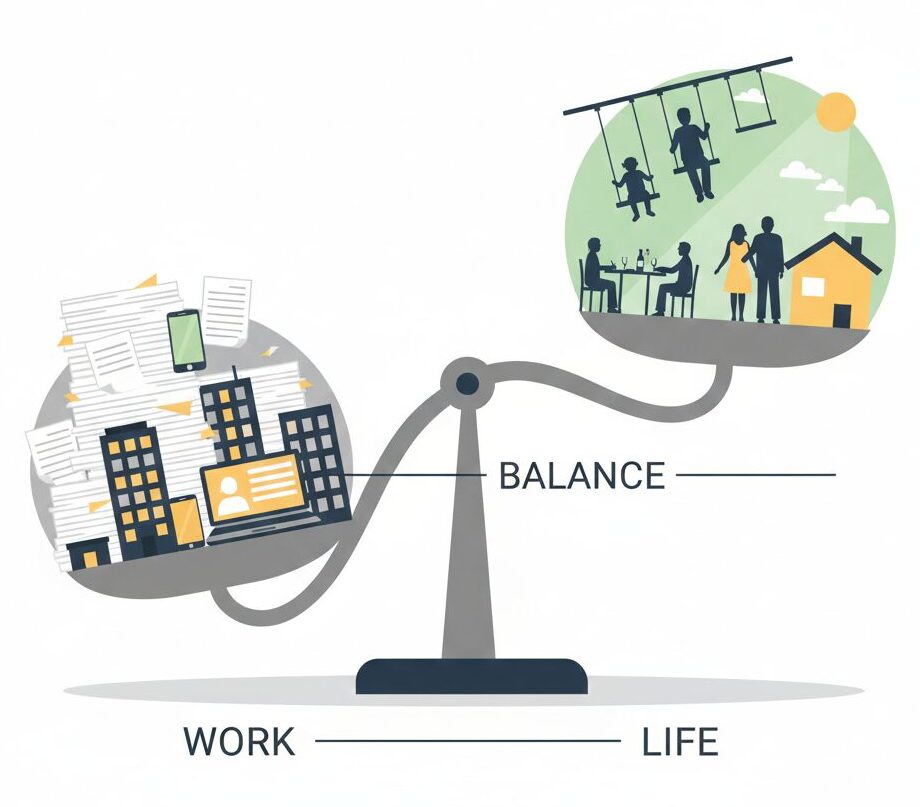
At the 20-year mark, he moved into a position just below senior management. Around this time, “Work-Life Balance” started becoming a buzzword in Japan. His job was to bridge the gap between management and staff. This is where he hit a wall.
- The Burden of Responsibility: Some subordinates began prioritizing their personal lives completely, claiming, “Taking leave is my right” or “It’s the manager’s job to handle the work I couldn’t finish.”
As a fellow parent, I didn’t quite agree with their attitude, but my husband pushed through, believing that “it’s my role” and feeling “saved” by those few colleagues who still spoke with the work in mind.
When he once sighed, “What am I even working for?” a subordinate who prioritized their personal life coldly replied, “To survive, right? And because of your rank!” I asked him, “Why do you give so much to this company?” His answer: “I can’t betray the seniors who supported me all these years.” Hearing that, I thought: “That’s about your career history, not about our family.”
5. Crossroads I: The “Domino” Promotion
His rapid promotion was unusual, but we soon learned the truth. It was a “domino effect” caused by mid-level employees quitting one after another. The mentors he vowed “never to betray” were leaving the company themselves.
6. Crossroads II: The Pain of Management (Present Day)
After 25 years, he was moved to a department completely outside his expertise. Imagine a sales veteran suddenly being told to manage a manufacturing plant—that’s how different it was. He found himself managing senior employees who refused to work, chose only the easy tasks, or got angry when their mistakes were pointed out.
Currently, he is in yet another “out of his element” department. He has four young staff members, but two are on childcare leave. He is left with two brand-new recruits.
- Missing Mid-Levels: Because mid-level staff have been quitting since his 20th year, the “bridge” between management and juniors is gone.
- Excessive Pressure: The Head Office demands he “mentor juniors into professionals” and “deliver results personally” simultaneously.
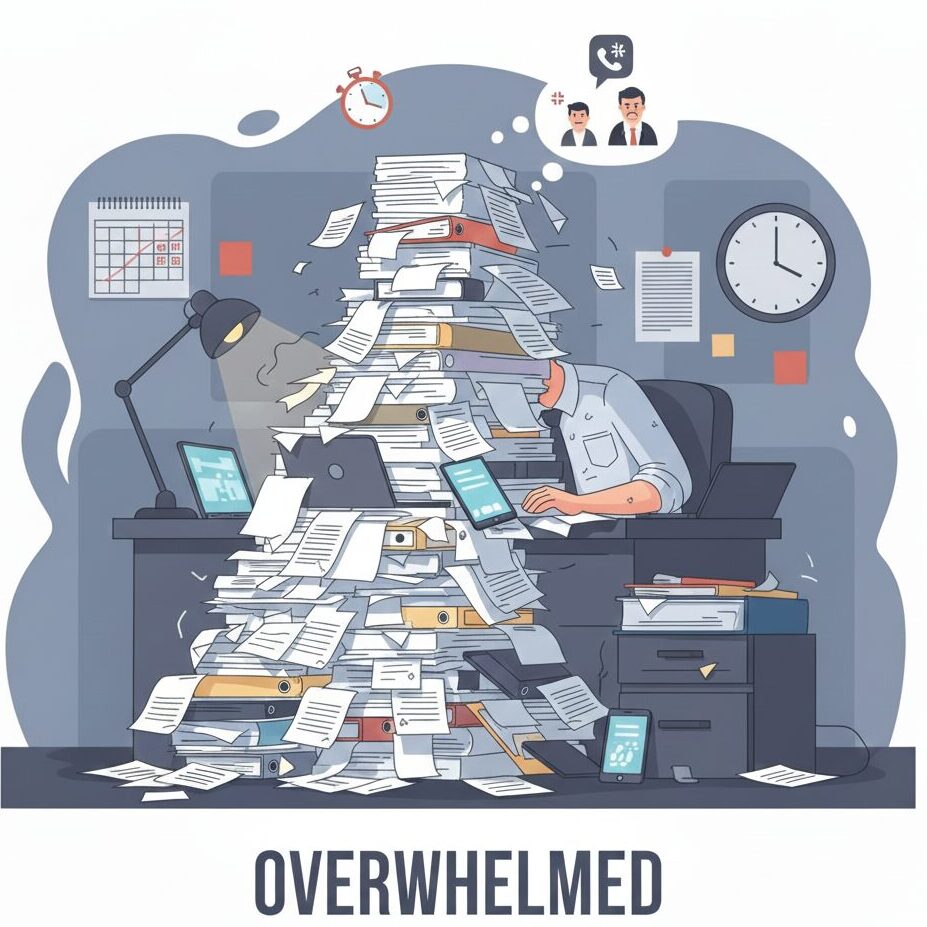
My husband is now researching the basics of a field he doesn’t know from scratch while trying to hand-hold new hires. He is trapped in a situation where both “Work” and “Life” are collapsing.
The greatest irony and pain for him is this: He couldn’t be there for his own three children because he prioritized the organization. He carries the heavy regret of not being present for their growth. Yet now, he is forced to sacrifice his current family time to “raise” other people’s children (his junior staff) as professionals.
He hears himself saying, “Why do I have to give the time I never gave to my own kids to someone else’s children for the sake of the company?”
As a manager, he no longer receives overtime pay. He leaves at 7:10 AM and returns after 10:00 PM. His actual overtime is 60–80 hours a month—all unpaid.
Finding What Lies Beyond “Stability”
After 25 years of devotion, my husband has finally paused. He has reached his limit.
- Is a “Stable Income” Really Necessary? While I won’t disclose the amount, the desire to prioritize mental health and life over a steady paycheck is winning.
- The Other Side of His Words: His sincerity is a virtue, but I still wonder where his own will went all these years. However, having seen his struggle up close, I know it’s time for us to redefine what is truly important in life.
We are at a major turning point. To bring back his smile, we are standing at a crossroads, ready to choose life over corporate stability.
This is a story of a typical Japanese “Salaryman.” I would love to hear from people in other countries. Is your work culture similar? What do you prioritize? Please let me know in the comments.
That’s all for today 🌸
I hope you have a wonderful day tomorrow 🌈


 English